macOS

Apple patches CoreGraphics zero-day flaw exploited in attacks
Apple released security updates to fix a zero-day vulnerability exploited in “extremely sophisticated” targeted attacks on iOS devices. Tracked as CVE-2026-86950, this flaw stems from an out-of-bounds write weakness discovered by Meta Product Security in CoreGraphics, a framework used for two-dimensional vector graphics, image rendering, and text drawing across iOS, macOS, iPadOS, watchOS, and tvOS. […]

MacSync malware uses public iCloud calendars to deliver new payloads
A new variant of the MacSync info-stealing malware targeting macOS systems now uses public iCloud calendar events to deliver fresh payloads. MacSync is a Swift-based malware that emerged in April 2025 and has been observed recently being delivered in ClickFix campaigns disguised as Homebrew and macOS disk space analyzer tools. Kaspersky researchers say that while […]

Homebrew 7.0.0 gets built-in GUI, better security controls
Homebrew package manager version 7.0.0 has been released with a built-in vulnerability scanner, stronger security controls, and the full release of its native BrewUI graphical interface. The open-source package manager is primarily used on macOS, allowing users to install software in a similar way to Linux package managers by automatically downloading packages and resolving and […]

New AmnesiaStealer macOS malware hijacks browser sessions via remote control
A new information-stealing malware called AmnesiaStealer, which targets macOS users via ClickFix attacks, includes a streaming module that allows the attacker to interactively control the victim’s web browser. A notable capability is copying the victim’s Chromium profile, including its authentication state, and loading it into a hidden, headless browser on the infected system. This allows […]

Hackers exploit macOS Screen Sharing flaw to deploy Monero miner
The Netherlands’ National Cyber Security Centre (NCSC) is warning that hackers are actively exploiting a macOS authentication bypass vulnerability after public exploit code emerged. The security issue lies in macOS Screen Sharing, a built-in remote desktop feature that allows remote desktop control over a network, using the VNC protocol over TCP port 5900. Apple fixed […]

ClickFix attack pushes macOS infostealer for crypto theft attacks
A Go-based malware delivered in ClickFix attacks targeting macOS users is stealing cryptocurrency assets, browser-stored passwords, Apple Keychain data, and cached credentials. The malware can intercept and redirect transactions with various cryptocurrencies. Although it can empty wallets entirely, it can also calculate the total value of a transaction to determine how much to divert to […]

New XCSSET variant targets macOS devs via compromised Xcode projects
A new version of the XCSSET malware is targeting thousands of macOS users through compromised Xcode projects and GitHub repositories. Xcode is the official software development kit (SDK) for creating, testing, and publishing software for all Apple’s platforms. After months of inactivity, XCSSET has resurfaced with an updated version, v40, that features enhanced evasion techniques and […]

New ClickLock macOS malware traps users into revealing login password
A new macOS information-stealing malware dubbed ClickLock terminates all visible processes to force users into entering their system login password. The malware is designed to steal cryptocurrency assets, login credentials, password-manager data, browser information, and macOS authentication data, and it can also install a persistent backdoor for ongoing remote access to infected systems. Researchers at […]
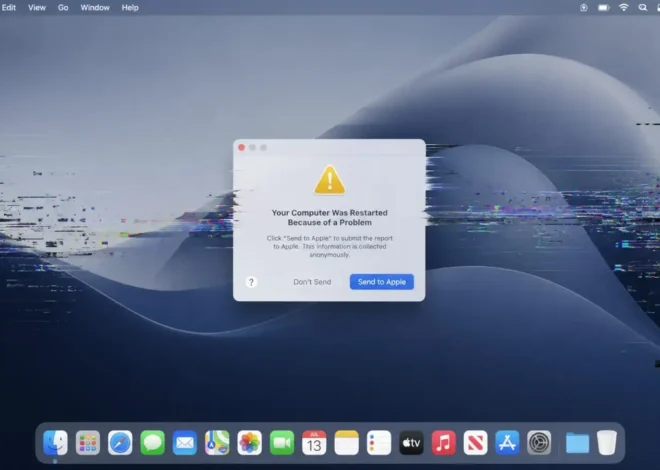
New CrashStealer malware poses as Apple crash reporting tool
A new macOS information-stealing malware called CrashStealer pretends to be Apple’s crash-reporting tool to steal credentials, keychain data, and crypto wallets. Malware researchers started tracking the malware in May, when it appeared to still be in development, but observed it being used in attacks in early July. CrashStealer has a typical infostealer capability set that […]

New macOS ClickFix attack silently mounts DMGs to push infostealer
A new macOS ClickFix campaign is using Terminal commands to silently download, mount, and launch info-stealing malware from malicious disk image (DMG) files. The campaign is infecting Mac devices with the Atomic macOS Stealer (AMOS) infostealer, which steals browser credentials, cryptocurrency wallet data, Keychain data, messaging app information, and user documents. Researchers at Palo Alto […]